
Introduction: Why Marketing Packages Are Essential for Business Growth
Here's something that'll change how you think about pricing: agencies using package-based pricing see their close rates jump by 35-40% compared to those quoting hourly rates or custom proposals every single time.
That's not a coincidence.
Marketing packages—pre-defined bundles of services with clear deliverables and fixed pricing—have become the backbone of successful agencies and service providers in 2026. Instead of billing $150 per hour and watching prospects squirm as they calculate costs, you're offering "SEO Growth Package: $2,500/month" with everything spelled out. Clean. Simple. Predictable.
The industry's moved away from hourly billing for good reason. Clients don't buy hours; they buy outcomes. They want to know exactly what they're getting and what it'll cost before they sign anything. Packages give them that clarity while making your life infinitely easier.
Think about the commercial benefits for a second. You'll get predictable monthly revenue instead of feast-or-famine cycles. Your sales process shrinks from weeks of back-and-forth proposals to "here's what we offer—which package fits your needs?" And when you've nailed your client acquisition strategy, packages make closing those leads straightforward.
Throughout this guide, you'll learn exactly how to build packages that sell, price them so you're profitable (not just busy), and present them in ways that get prospects nodding yes. Whether you're running a one-person operation or managing a growing agency, you'll walk away with a framework that works.
Let's get into it.
What Are Marketing Packages? (Definition & Core Components)
Marketing packages are pre-defined bundles of services you sell at a fixed price. Instead of quoting each client individually or charging hourly, you're offering a set menu of deliverables with clear boundaries—think of it like ordering a combo meal instead of building your order item by item.
Here's where packages differ from other pricing models. A retainer typically involves ongoing work with flexible deliverables and monthly billing. Project-based pricing covers one-off initiatives with custom scopes. Packages sit somewhere in between: they're standardized offerings that clients can purchase repeatedly, but with crystal-clear expectations upfront.
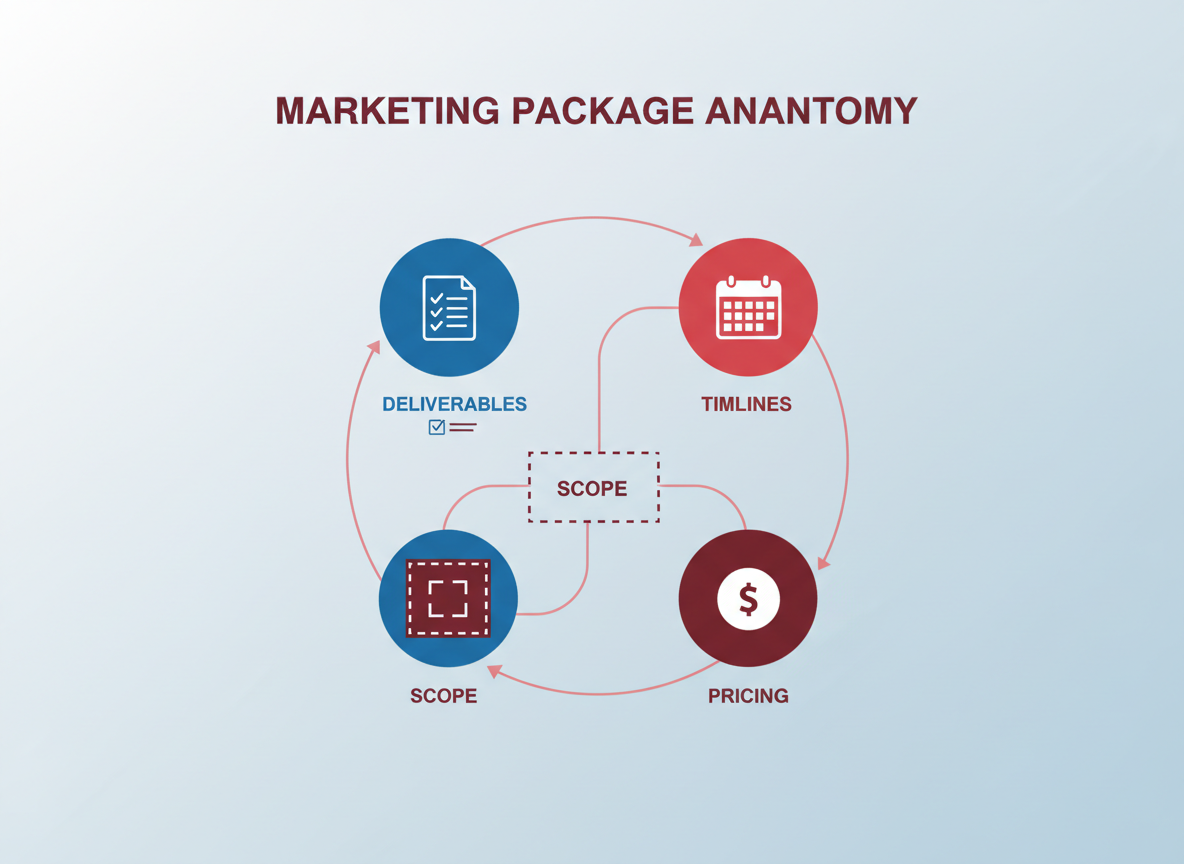
Every effective package includes four core components. First, you've got your deliverables—the actual work you'll complete (blog posts, social campaigns, email sequences). Second, timelines establish when things get done. Third, pricing removes negotiation from the equation. Fourth, scope boundaries protect you from endless revisions and scope creep.
Why do packages work so well? They simplify decisions. When faced with too many options, buyers freeze. Present them with three clear tiers, and they'll typically choose one within minutes. Packages also create perceived value—bundling five services feels more valuable than buying them separately, even at the same price. This taps into psychological anchoring, where the "premium" package makes the "standard" option seem more reasonable.
You'll typically see packages formatted in three ways. Tiered packages (basic, standard, premium) let clients self-select based on budget and needs. Service-specific packages focus on one discipline—like "SEO Starter Package" or "Social Media Launch Bundle." Outcome-based packages promise specific results, such as "10 qualified leads per month."
The beauty of packages? They scale your business on autopilot. Once you've built them, you can sell the same offering repeatedly without reinventing your process each time.
9 Types of Marketing Package Models (With Pricing Strategies)
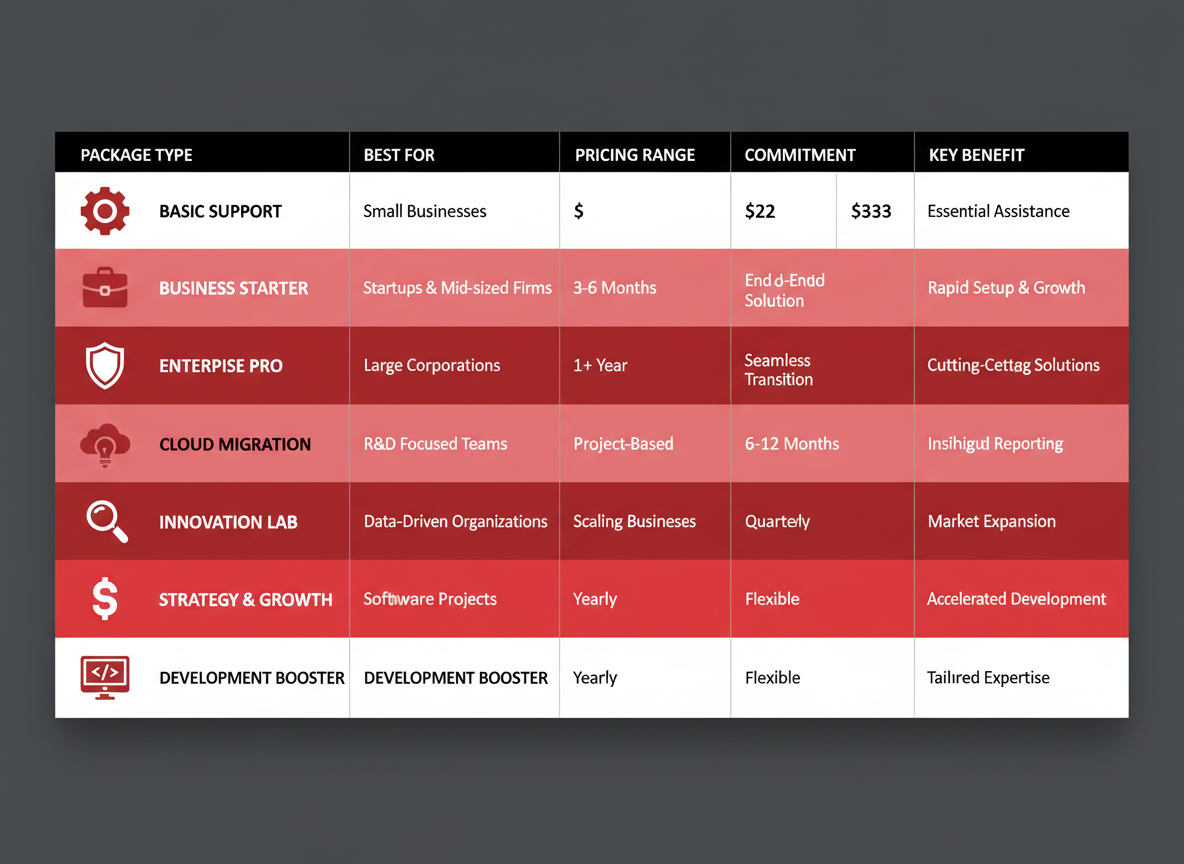
The right package structure can make or break your marketing business. Here's how to pick the model that matches your workflow and your clients' needs.
Retainer packages offer monthly recurring services with consistent deliverables. Think 10 blog posts, 20 social media graphics, and weekly analytics reports—every single month. Pricing typically ranges from $2,000 to $15,000 monthly depending on scope. They're predictable, they stabilize your revenue, and clients love the reliability.
Project-based packages work best for one-time events. A product launch might include landing page copy, email sequences, ad creative, and launch week management for $5,000 flat. You're in, you're out, and everyone knows the boundaries upfront.
Performance-based packages tie your fee to actual results. You might charge $3,000 base plus $500 per qualified lead above 50, or 15% of attributed revenue. They're risky but potentially lucrative—and they prove you're confident in your work.
Tiered packages give clients options. Your "Starter" at $1,500 includes essentials, "Professional" at $4,000 adds advanced strategies, and "Enterprise" at $10,000 brings custom solutions and priority support. Most buyers pick the middle option, which is exactly what you want them to do.
A la carte with bundles let clients build their own while incentivizing packages. Individual blog posts cost $400 each, but a 10-pack drops the price to $300 per post. You're giving them flexibility without sacrificing bundle sales.
Subscription packages grant ongoing access with monthly credits. Clients pay $2,500 monthly and receive 40 service credits to spend how they want—maybe 20 for content, 15 for design, and 5 for strategy calls. It's flexible without being chaotic.
Hybrid packages combine guaranteed work with performance bonuses. You might do $4,000 in fixed monthly deliverables plus earn 10% of sales from campaigns you manage. Everyone wins when results happen.
Industry-specific packages speak directly to niche needs. Your e-commerce package includes product descriptions, abandoned cart emails, and seasonal campaign planning. Your SaaS package focuses on demo videos, case studies, and conversion optimization. Tailoring beats generic every time.
Seasonal packages capitalize on timing. A Q4 e-commerce blitz package or tax season bundle for accountants creates urgency while meeting real business cycles. They're time-limited, which drives faster decisions.
The best package model? The one you can deliver consistently while maintaining healthy margins. Start with one, test it with three clients, then expand from there.
How to Build High-Converting Marketing Packages: Step-by-Step Framework
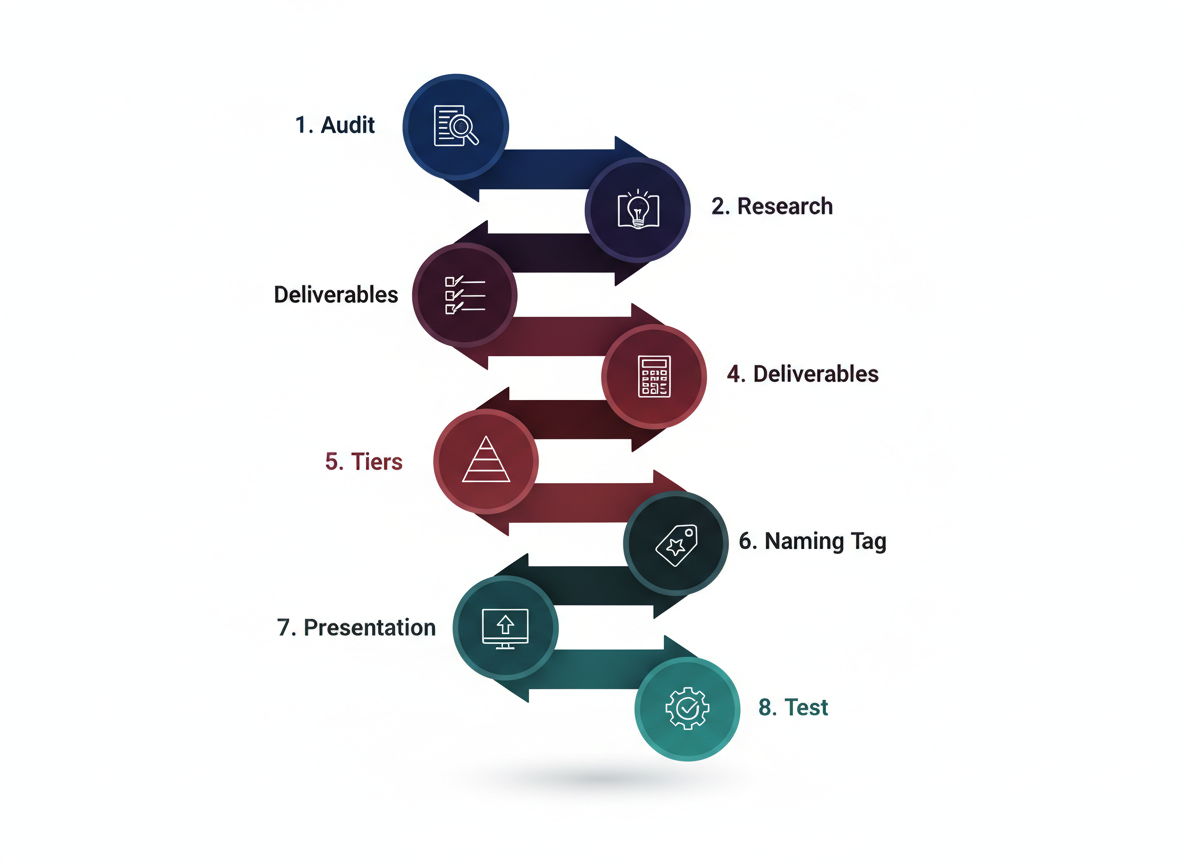
Creating effective packages in marketing isn't about randomly bundling your services. It's about strategic design that makes buying easier for clients while boosting your profitability. Here's how to build packages that actually convert.
Step 1: Audit Your Most Profitable Services
Start by reviewing your last 12 months of client work. Which services delivered the highest margins? Which ones do clients consistently request together? You'll often find natural combinations—like content creation paired with social media management, or SEO audits bundled with technical implementation.
Step 2: Research the Market and Find Your Gaps
Look at what's available in your market. Where's there room for something different? Maybe everyone offers basic social media packages, but nobody's bundling it with email marketing automation. That's your opportunity.
Step 3: Define Deliverables with Crystal-Clear Outputs
Vague promises kill package sales. Instead of "social media management," specify "15 custom posts per month, 5 stories per week, monthly analytics report." Clients need to know exactly what they're getting.
Step 4: Calculate Your Costs and Set Profit Targets
Factor in everything—your time, tools, outsourced work, and overhead. Then add a 40-60% profit margin. If a package costs you $1,000 to deliver, price it between $1,600 and $2,000. Don't leave money on the table by underpricing your expertise.
Step 5: Create Three Tiers Using the Goldilocks Principle
Most buyers choose the middle option when presented with three choices. Design your packages accordingly: a basic tier for budget-conscious clients, a premium tier that showcases what's possible, and a middle "sweet spot" option where you expect most sales.
Step 6: Name Your Packages Strategically
Skip generic labels like "Bronze, Silver, Gold." Use names that reflect outcomes or positioning: "Launch," "Growth," and "Scale" work better because they speak to where clients want to go.
Step 7: Design Professional Presentation Materials
Create one-page package summaries, comparison charts, and sales proposals that look polished. Your presentation quality signals the quality of your work.
Step 8: Test and Iterate
Launch your packages with a small group of pilot clients. Gather feedback, track conversion rates, and adjust pricing or deliverables based on real-world data. Your first version won't be perfect—and that's fine.
Marketing Package Pricing: Strategies, Psychology & Real Examples
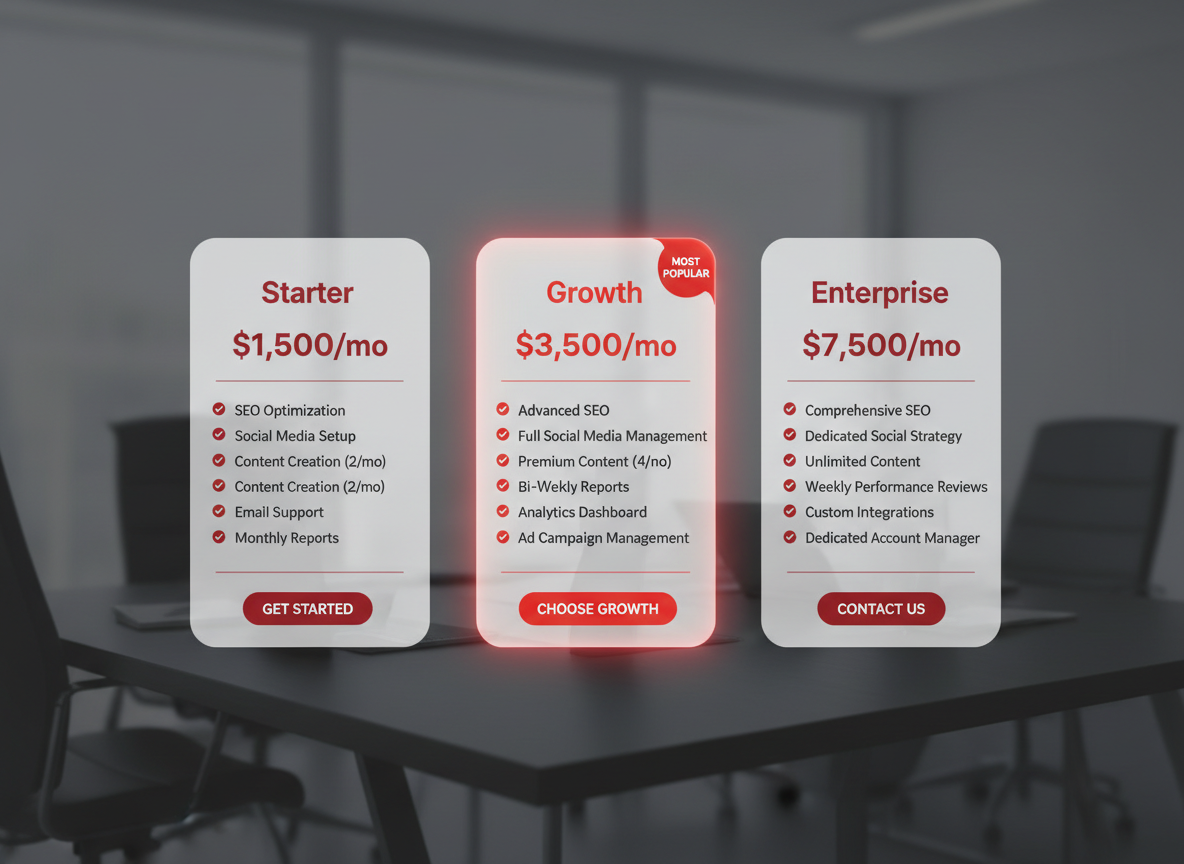
Pricing packages in marketing isn't about pulling numbers from thin air. You've got two main approaches: value-based pricing (what it's worth to your client) and cost-plus pricing (your costs plus margin). Here's the reality—value-based pricing wins every time for service packages because it ties directly to client outcomes.
Let's talk real numbers. A starter social media package might run $500-$1,200 monthly, covering 3-5 platforms with basic content. Mid-tier content marketing packages typically fall between $2,500-$5,000, including blog posts, email campaigns, and distribution. Comprehensive SEO packages with technical audits, content creation, and link building? You're looking at $3,000-$10,000+ monthly. If you're working with an SEO automation platform, you can deliver premium results while keeping your actual costs lean.
The psychology of package pricing matters more than you think. Charm pricing ($997 instead of $1,000) still works—it signals value-consciousness. Anchoring is even more powerful: show your premium $8,000 package first, and suddenly your $4,500 mid-tier looks reasonable. The decoy effect? That's when your middle package (which you want most clients to choose) looks like the obvious winner compared to the basic and premium options.
Your tier differentiation should follow the 30-50% rule. If your Starter package costs $1,000, your Growth package should be $1,400-$1,500, and your Premium at $2,000-$2,250. This creates clear psychological separation without making the jump feel impossible.
Should you show pricing publicly? Display it for standardized packages under $5,000 monthly. You'll filter out tire-kickers and attract serious buyers. For custom enterprise solutions above $10K, use "Request a Quote"—these deals need conversation anyway.
When clients balk at your prices, don't defend the cost. Demonstrate the value. Break down what each deliverable generates: "This SEO package targets keywords worth 5,000 monthly searches in your market. At a 2% conversion rate, that's 100 qualified leads."
Annual pricing deserves its own strategy. Offer 15-20% off for annual commitments—that's typically two months free. You'll improve cash flow and reduce churn. Monthly billing works better for newer agencies still proving their value, but don't leave that annual discount on the table once you've built trust.
Structuring Tiered Packages: Basic, Premium & Enterprise Models
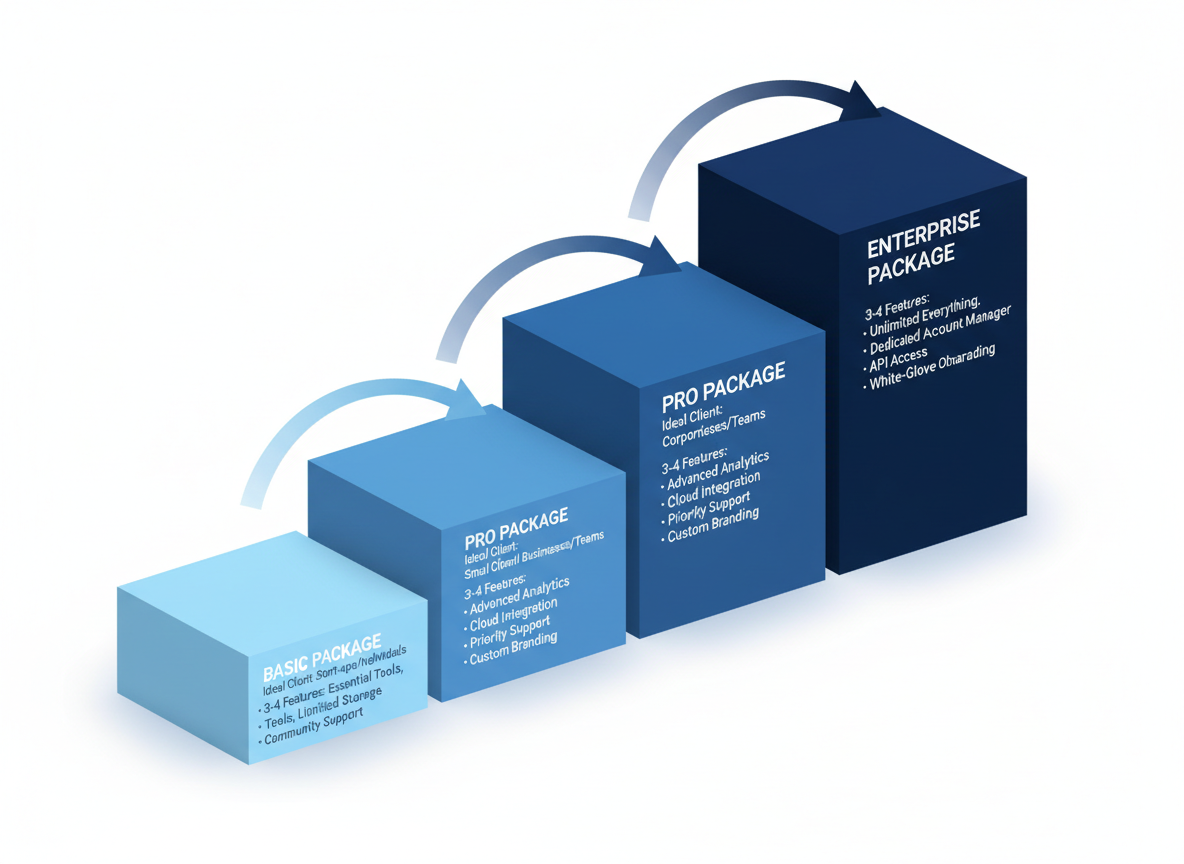
Three-tier pricing isn't just a convention—it's behavioral psychology at work. When presented with three options, most buyers gravitate toward the middle choice, avoiding the perceived limitations of the cheapest option and the sticker shock of the highest. This decision architecture naturally guides prospects toward your most profitable sweet spot.
The key is creating clear value escalation without overwhelming buyers with dozens of features they'll never use. Each tier should solve progressively complex problems while maintaining obvious differentiation.
Starter/Basic Tier ($500-$2,000): Your entry-level packages in marketing should address immediate pain points for small businesses. Think foundational email sequences, basic social media management, or starter SEO audits. This tier proves your value without major commitment. Include 2-3 core deliverables that demonstrate results quickly—maybe 4 weekly blog posts, basic keyword research, and monthly performance reports.
Growth/Premium Tier ($2,000-$5,000): This is where you'll convert most clients. Build on the starter foundation with expanded services: comprehensive content calendars, advanced automation workflows, conversion optimization, and priority support. You're not just delivering more—you're solving bigger problems. Add strategic consulting calls, A/B testing, and multi-channel campaigns that run on autopilot.
Enterprise/Custom Tier ($5,000+): Reserve this for high-touch, customized solutions. Include white-glove service, dedicated account management, custom integrations, and strategic planning sessions. This tier signals exclusivity and bespoke attention.
Name your tiers strategically. Skip generic labels like "Bronze, Silver, Gold." Instead, use names that speak to your clients' aspirations: "Launch," "Scale," "Dominate" or "Essential," "Professional," "Executive."
Feature gating is your secret weapon here. Don't just add more stuff to higher tiers—add better access, faster turnaround, deeper analysis, and strategic guidance. A basic tier might include monthly reports while premium gets weekly insights with actionable recommendations. That's value escalation that converts.
What to Include in Marketing Packages: Service Bundles by Category
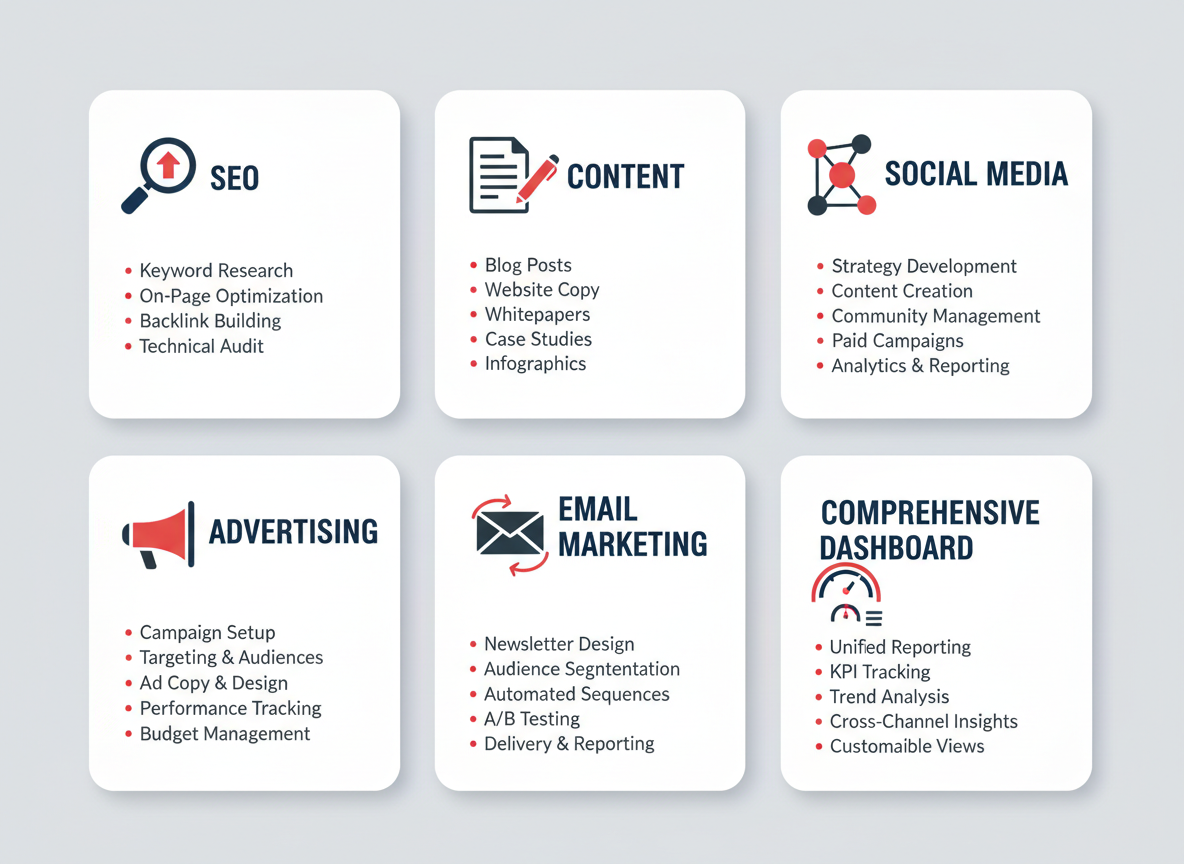
Let's break down the most effective packages in marketing by category, so you can cherry-pick what makes sense for your business.
SEO packages typically bundle keyword research, on-page optimization, technical audits, and link building. A starter package might include 20 target keywords with monthly tracking and basic technical fixes, while premium tiers add content creation and aggressive link acquisition. You'll want to structure these as ongoing monthly retainers since SEO isn't a one-and-done service.
Content marketing packages work best when you combine creation with distribution. Bundle 4-8 blog posts monthly with email newsletters, social media promotion, and quarterly ebooks or whitepapers. This gives clients a complete content engine rather than scattered pieces they don't know what to do with.
Social media packages should cover content creation, scheduling (20-40 posts monthly), community management, and paid ad budget management. Split these by platform count—managing Instagram and Facebook costs less than adding LinkedIn and TikTok to the mix. Include analytics reporting so clients see what's actually working.
Paid advertising packages need campaign setup, weekly optimization, A/B testing, and detailed reporting. Price these based on ad spend management—you'll charge differently for managing $2,000 versus $20,000 monthly budgets. Most agencies use a percentage model here (10-20% of ad spend).
Email marketing packages combine strategy, design templates, copywriting, and automation setup. A basic package might include 4 campaigns monthly, while advanced tiers add segmentation, behavioral triggers, and conversion funnel sequences.
Comprehensive digital marketing packages bundle multiple channels—think SEO + content + social + email. These command premium prices because you're managing the entire marketing ecosystem. They're perfect for clients who want one team handling everything.
The secret to bundling? Pair services that naturally support each other. SEO needs content. Content needs distribution. Paid ads need landing pages. When you package complementary services, clients perceive higher value and you deliver better results.
Always include add-on options like rush delivery, additional revisions, or performance calls. These upsells increase your average order value without requiring new client acquisition.
Package Naming & Positioning: How to Make Your Offerings Irresistible
Your package names do more heavy lifting than you think. They're the first filter buyers use to decide if you're speaking their language.
The psychology here is straightforward: aspirational names inspire action, while descriptive names clarify value. The best approach? Blend both. "Growth Accelerator" tells buyers where they're headed and what you're doing for them.
Metal tiers (Bronze, Silver, Gold) work because everyone understands the hierarchy instantly. They're safe, familiar, and convert well when you're starting out. Growth stages (Starter, Growth, Scale) speak directly to business maturity and resonate with entrepreneurs who see themselves climbing. Outcome-based names (Visibility, Authority, Dominance) are the most powerful—they sell the destination, not the trip.
Here's what converts: "Authority Builder" beats "Advanced SEO Package" every time. "Market Leader" outperforms "Premium Tier." Your buyers don't want features; they want transformation.
Match your naming to buyer personas. Startups respond to "Launch Pad" and "Foundation." Established businesses want "Expansion" or "Amplify." Enterprise clients prefer understated confidence like "Executive" or "Enterprise Suite."
Power words matter. Use "accelerate," "amplify," "dominate," "breakthrough," and "exclusive." Pair them with benefits: "Revenue Accelerator," "Visibility Breakthrough," "Market Dominance Package."
Visual branding seals the deal. Color-code your packages consistently—bronze, silver, and sapphire work better than random blues. Add icons or badges that reinforce value perception.
Here's what successful agencies actually use: "Traction Engine" (for lead generation), "Authority Platform" (for thought leadership), "Scale System" (for operations). Notice how each promises a specific outcome while avoiding commodity language like "basic" or "standard"?
That's positioning that converts on autopilot.
Presenting & Selling Marketing Packages: Conversion Optimization Tactics
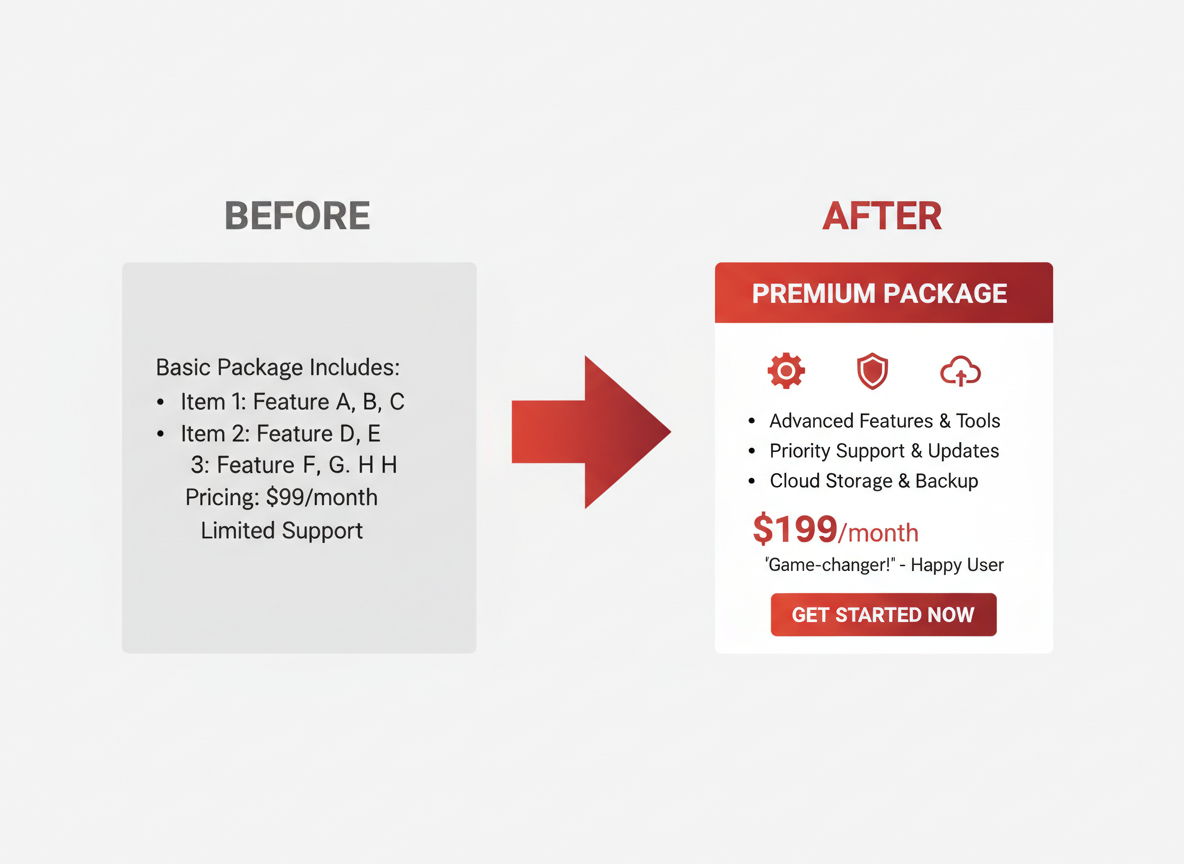
You've built your packages in marketing—now it's time to sell them. The presentation matters just as much as the package itself.
Start with your pricing page. Don't hide your packages behind a "contact us" form. Display them clearly with comparison tables that make differences obvious at a glance. Your Bronze package gets monthly reports? Your Gold gets weekly reports plus bi-weekly strategy calls? Spell it out. When prospects can compare features side-by-side, they naturally gravitate toward the tier that fits their needs.
Create a one-pager for each package tier. These should be visual, scannable documents that salespeople can send after discovery calls. Include three client testimonials specific to that package level, along with average results clients see. "After three months in our Silver package, clients typically see a 45% increase in qualified leads" beats generic promises every time.
Interactive pricing tools convert like crazy. When prospects can toggle features on and off, they're mentally committing before they even reach out. Tools like Vulcaro's automation features can be positioned as premium add-ons that run on autopilot, increasing your margins while delivering hands-free value to clients.
Here's the tricky part: handling custom requests. When someone asks for a custom package, don't immediately cave. Instead, say: "Most clients who ask for customization actually find our Gold package plus one add-on gives them exactly what they need." You're protecting your pricing structure while still showing flexibility.
Create urgency with quarterly promotions. "Book our Growth package this month and get three months of advanced analytics included." Time-bound offers push fence-sitters to commit.
Finally, A/B test everything. Try different package names, presentation orders, and visual layouts. Even switching your middle tier from "Professional" to "Growth" can shift conversion rates by 15-20%. Track what works, then double down on it.
Real Agency Case Studies: Package Structures That Generated Revenue Growth
Let's look at three agencies that transformed their businesses with strategic package design.
Case Study 1: SEO Agency's 3-Tier Transformation
A Chicago-based SEO agency was bleeding clients with custom pricing. Every proposal felt like starting from scratch. They restructured around three clear tiers:
Starter ($1,500/month): Local SEO, 5 keywords, monthly reports
Growth ($3,500/month): National SEO, 15 keywords, content creation, technical audits
Enterprise ($7,500/month): Unlimited keywords, dedicated strategist, competitive analysis
Within six months, their monthly recurring revenue jumped 67%. The game-changer? Most clients chose the middle tier, and upselling became natural when they showed growth metrics. Implementation took just three weeks, with break-even hitting at month two.
Case Study 2: Content Marketing's Subscription Success
A content agency in Austin shifted to subscription packages in marketing with three-month minimums. Their structure was simple:
4 blog posts/month + social distribution: $2,000
8 blog posts/month + email newsletter: $3,800
12 blog posts/month + full content calendar: $5,500
They hit 85% retention by delivering content via automated workflows through platforms that scheduled everything weeks in advance. Clients loved the predictability, and the agency reduced project management time by 40%. Profit margins improved because they batched similar content work across multiple clients.
Case Study 3: Full-Service Agency's Hybrid Approach
A Denver agency combined one-time setup fees with ongoing retainers. Their package looked like:
Website design: $8,000 (one-time)
Monthly marketing retainer: $2,500 (ongoing SEO, PPC management)
Quarterly strategy sessions: Included
This hybrid model boosted profit margins 40% in eight months. The setup fee covered intensive initial work, while retainers provided steady cash flow. They automated reporting and client communications, cutting delivery costs 30% without sacrificing quality.
The common thread? Clear structures, automated delivery, and pricing that reflected real value—not just hours worked.
Common Mistakes to Avoid When Creating Marketing Packages
Even experienced marketers stumble when building packages in marketing. Let's look at what trips people up most often.
Mistake #1: Creating too many package options and causing decision paralysis
Three tiers work best. Four at most. Beyond that, you're just making clients freeze up and bail. I've watched businesses offer seven different packages and wonder why no one buys anything.
Mistake #2: Underpricing packages and sacrificing profitability
You're not running a charity. Calculate your actual costs, factor in delivery time, then add healthy profit margins. Underpricing trains clients to expect cheap work and attracts nightmare customers.
Mistake #3: Failing to clearly define scope boundaries and deliverables
"Social media management" means nothing. Spell out exactly what's included: three posts per week, response time of 24 hours, monthly analytics report. Vague promises lead to scope creep that kills your margins.
Mistake #4: Making tiers too similar without clear value differentiation
Your mid-tier package shouldn't just be your basic package plus two extra blog posts. Each tier needs obvious value jumps that justify the price increase.
Mistake #5: Ignoring package economics and delivery capacity constraints
You can't deliver 50 custom designs per month while running your business. Build packages you can actually fulfill without burning out.
Mistake #6: Not updating packages based on market changes and feedback
What worked in 2024 might bomb now. Review your packages quarterly, listen to sales conversations, and adapt.
Mistake #7: Offering unlimited services that become unprofitable
"Unlimited revisions" sounds great until that one client requests their fifteenth round of changes. Set realistic limits.
To audit your current packages, list all deliverables, track actual delivery time for each, calculate true costs, and compare against pricing. Most businesses discover they're either overdelivering or undercharging—often both.
How to Transition Existing Clients to Package-Based Pricing
Switching to packages in marketing doesn't mean abandoning your current clients—it's about bringing them along for a better experience.
Start by auditing your existing relationships. Which clients already pay monthly retainers? Who's been with you longest? These loyal customers make ideal candidates for your first package transitions. Look for patterns in what services they're already buying together.
Your communication strategy matters enormously here. Don't just send an email announcing "we're changing everything." Instead, schedule personal conversations with each key client. Explain how packages will actually simplify their lives—clearer deliverables, predictable timelines, and better results. Frame it as an upgrade, not a disruption.
You've got two main approaches: grandfathering or full migration. Grandfathering lets existing clients keep their current pricing while new clients pay package rates. It's peaceful but creates administrative headaches. Full migration moves everyone to new packages within 3-6 months, usually with transition incentives like locked-in rates or bonus services.
Here's what works: offer your current clients first access to new packages at 10-15% off for the first six months. They'll feel valued, not forced.
When you hit resistance—and you will—listen first. Most objections stem from fear of losing flexibility or paying more. Show concrete examples of how their current spending maps to package pricing. Often, they'll realize they're getting more value for similar investment.
Track your success through retention rates, average contract value, and client satisfaction scores. If you're losing more than 10-15% of clients during transition, slow down and adjust your approach. The goal isn't just converting packages in marketing—it's keeping great clients while improving your business model.
Tools & Templates for Building Marketing Packages
The right tools transform package creation from guesswork into a repeatable system.
Start with a package pricing calculator template that tracks your actual costs, labor hours, and target margins. Spreadsheets work fine—just include columns for direct costs, overhead allocation, and profit buffers. You'll spot unprofitable packages before they become problems.
Proposal templates matter more than you'd think. Create standardized layouts that showcase your packages with clear deliverables, timelines, and pricing tiers. Include comparison charts that help prospects understand which package fits their needs. Templates cut proposal time from hours to minutes while maintaining professional polish.
Your contract templates should define scope boundaries explicitly. List what's included, what's not, and how change requests work. Clear documentation prevents scope creep and protects both parties.
Build ROI calculators that demonstrate tangible value. When prospects see projected returns in actual dollars, packages sell themselves.
For delivery, project management tools like Asana or ClickUp keep package deliverables on track. But here's where smart agencies pull ahead—automation platforms like Vulcaro drastically reduce delivery costs. When you automate repetitive tasks that typically eat up package margins, you're suddenly more profitable on every sale. Vulcaro's integrations connect your entire stack, eliminating manual handoffs between tools.
Finally, your CRM should track package renewals and upsell opportunities. HubSpot, Pipedrive, or even a well-organized spreadsheet works—just track it systematically.
Industry-Specific Package Examples & Benchmarks
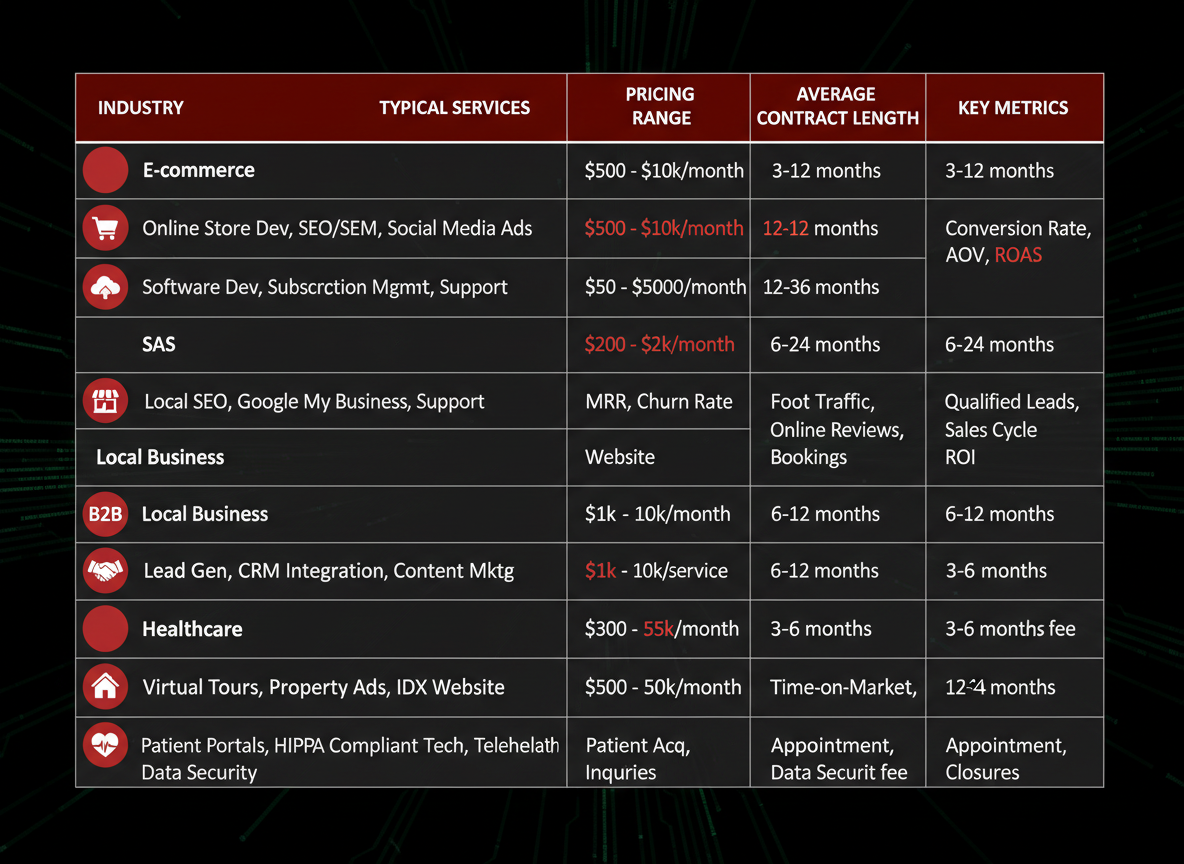
Understanding what works in your specific market helps you price confidently and build packages in marketing that actually convert.
E-commerce Marketing Packages ($2,000-$8,000/month) typically bundle product photography optimization, shopping feed management, email automation sequences, and retargeting campaigns. You'll see the higher end including full conversion rate optimization and abandoned cart recovery systems. Most agencies maintain 40-50% profit margins here.
SaaS Marketing Packages ($3,000-$15,000/month) focus on growth metrics that matter to software companies. These bundles often include content marketing, trial optimization, customer onboarding email flows, and feature launch campaigns. Retention rates here average 18-24 months when you deliver consistent MQL growth.
Local Business Marketing Packages ($500-$3,000/month) center on Google Business Profile management, local citation building, reputation monitoring, and location-specific content. Don't underestimate these smaller packages—they scale beautifully with 55-60% profit margins and strong referral rates.
B2B Marketing Packages ($4,000-$20,000/month) emphasize lead generation through LinkedIn outreach, account-based marketing, whitepapers, and webinar promotion. These command premium pricing because you're directly tied to pipeline growth.
Real Estate Marketing Packages ($1,000-$5,000/month) combine property listing optimization, virtual tour creation, targeted Facebook ads, and agent personal branding. Package these separately for properties versus agent promotion.
Healthcare Marketing Packages ($2,500-$10,000/month) require HIPAA compliance awareness, reputation management, patient education content, and healthcare-specific advertising restrictions.
The sweet spot across industries? Three-tier pricing with your middle package generating 60% of sales. Average retention rates hover around 14 months industry-wide, though relationship-focused industries like healthcare and B2B see 20+ months.
Customize for niche industries by researching their specific pain points, regulatory requirements, and success metrics—then bundle services that directly address those needs while maintaining your target 50%+ gross margins.
Scaling Your Agency with Package-Based Business Models
Once you've nailed down your packages in marketing, scaling becomes significantly easier than the traditional project-by-project grind. Here's what happens: predictable revenue streams emerge. When you know that ten clients are paying $2,500 monthly for your "Growth Package," you're looking at $25,000 in forecastable income. That certainty changes everything about how you run your business.
Resource allocation becomes straightforward. Instead of scrambling to staff random projects, you're building teams around specific package deliverables. Assign one content writer to handle all blog posts across your mid-tier packages. Dedicate another team member to social media management for premium clients. This specialization breeds efficiency and quality.
Automation multiplies your profit margins without inflating payroll. Tools like Vulcaro handle SEO content creation on autopilot, letting you deliver consistent value across multiple packages simultaneously. Your pricing structure stays competitive while your margins improve because you're leveraging technology, not just labor.
Build SOPs for everything. Document how you onboard package clients, what Week 1 looks like, who handles what tasks, and how you measure results. These procedures become your operational backbone and make your agency valuable to potential buyers who see systems instead of chaos.
Introduce new tiers when existing ones consistently sell out or when clients repeatedly request similar customizations. That's market validation telling you where to expand.
Here's the beautiful part: properly systematized packages run themselves. Clients get onboarded through automated sequences, content gets created and published without your involvement, reports generate automatically. You've built a business that delivers results while you focus on strategy, growth, or that vacation you've been postponing for three years.
Future Trends: The Evolution of Marketing Packages in 2026 and Beyond
The way agencies structure packages in marketing is shifting faster than most people realize. AI-powered customization tools are already letting businesses adjust their package components in real-time based on performance data. Instead of locked-in monthly retainers, you'll see more dynamic pricing that scales with results—pay more when campaigns convert, less when they don't.
Outcome-based pricing is becoming the norm. Clients aren't buying "10 blog posts per month" anymore—they're buying "15% traffic increase" or "50 qualified leads." This shift forces agencies to get serious about measurement and accountability.
Subscription models with credit systems are gaining traction too. Think of it like rollover minutes: unused blog credits convert to social posts, or you can bank them for a product launch next quarter. Flexibility wins.
Automation is reshaping package economics entirely. Tools that generate content, schedule posts, and optimize campaigns on autopilot are slashing delivery costs. Smart agencies are pocketing the margin increase while slightly reducing client prices—everyone wins.
Transparency is having a moment. More marketing firms are publishing their pricing publicly, which pressures everyone to justify their value clearly.
Watch for specialized micro-packages targeting single channels—like "TikTok Launch Sprint" or "Local SEO Audit + Fix"—that solve one specific problem fast. The future belongs to agencies that can bundle services efficiently while proving they're worth every dollar.
Conclusion: Building Your Profitable Package Strategy
Packages in marketing transform how you price, sell, and deliver services. They simplify decision-making for prospects, increase average transaction values, and create predictable revenue streams that fuel business growth.
In 2026's competitive landscape, service providers who master package-based pricing gain a clear advantage. Buyers prefer straightforward choices over custom quotes. They want to know exactly what they're getting and what it'll cost.
Here's your action plan: Start by auditing your current pricing. What services do you offer most frequently? What combinations would solve complete problems? Research what packages already exist in your market, then build a three-tier structure that outperforms them.
Test your packages with a small audience first. Gather feedback, track conversion rates, and refine based on real results. Remember that successful packages strike the right balance—they must deliver exceptional value while maintaining healthy profit margins.
Don't try launching multiple package categories at once. Pick one focus area, validate it works, then expand.
Here's the multiplier: automation tools amplify your package profitability. When you reduce delivery costs through systems and technology, your margins expand dramatically. Vulcaro's automated content creation handles the heavy lifting of content production on autopilot, letting you deliver more value while maintaining premium pricing.
Your first package could be live within a week. Start building.
Frequently Asked Questions (FAQ)
What's the difference between marketing packages and retainers?
Packages are project-based bundles with defined deliverables and timelines—think "Website Launch Package" or "90-Day SEO Starter." Retainers are ongoing monthly agreements for continuous services. Packages work better for project-specific work, while retainers suit ongoing management.
How many marketing packages should I offer?
Three tiers is the sweet spot. Too few options limit client choice, too many creates decision paralysis. Your basic tier captures budget-conscious clients, the middle tier (your most popular) hits the mainstream, and the premium tier appeals to high-value clients who want comprehensive support.
What's the ideal profit margin for marketing packages?
You should target 40-60% profit margins. This accounts for delivery costs, unexpected challenges, and business sustainability. Anything below 30% means you're underpricing and risking burnout.
Should I display package pricing on my website?
It depends on your average deal size. If you're selling packages under $5,000, transparent pricing can accelerate decision-making and pre-qualify leads. For complex, custom solutions above $10,000, hiding prices lets you have discovery conversations first. Test both approaches with your specific audience.
How do I handle clients who want custom packages?
Start by steering them toward your closest existing package, then offer add-ons. If they still need customization, create it—but only after they've committed verbally. Don't waste hours building proposals for tire-kickers.
What's the best way to price SEO packages specifically?
Base pricing on business outcomes, not just deliverables. A local service business might pay $2,000/month for rankings that generate leads worth $50,000. Focus your packages on result-oriented tiers: foundational SEO, competitive growth, and market domination.
How often should I update my marketing packages?
Review quarterly, but don't change constantly. Market shifts, new tools, and client feedback should trigger updates. The goal isn't reinvention—it's refinement.
Can I offer both packages and hourly pricing?
You can, but it confuses positioning. Pick your primary model and stick with it. If you must offer both, keep hourly rates for true one-off consulting only.
What tools help automate package delivery and reduce costs?
Automation platforms streamline repetitive tasks and reporting. Vulcaro handles content optimization on autopilot, while project management and invoicing tools keep delivery efficient. Check out Vulcaro's resources for workflow optimization strategies.
How do I transition from hourly billing to packages?
Start with new clients first—test your packages without disrupting existing relationships. Once refined, approach current clients during renewal conversations: "I've restructured my services to deliver better results at predictable costs." Most will appreciate the clarity.