
Introduction: What Makes SEO Writing Different (And Why It Matters)
You've spent hours crafting what you thought was brilliant content. You hit publish, wait a few weeks, and... nothing. No traffic. No rankings. It's like shouting into a void.
Here's the thing: writing well and writing for SEO aren't the same skill.
Traditional content writing focuses on storytelling, persuasion, and brand voice. SEO writing does all that plus speaks Google's language. It's the difference between writing a beautiful letter and writing one that actually gets delivered to the right mailbox.
SEO writing strategically weaves keywords into content that satisfies search intent while keeping readers engaged. It balances technical optimization—like header structures, internal linking, and semantic relevance—with genuine value that makes people want to read, share, and convert.
In this guide, you'll see 12 real examples of SEO writing done right. Not theory or vague advice, but actual content pieces with breakdowns of what works and why. We'll walk through step-by-step frameworks you can copy, whether you're writing your first blog post or managing a content team.
You'll learn techniques that work for beginners and advanced strategies that scale. And because it's 2026, we can't ignore how automation is transforming this space. Tools are getting smarter, making it possible to produce optimized content faster without sacrificing quality. (We've covered this extensively in our SEO automation platform guide if you're curious about leveraging these tools.)
Ready to see what top-ranking SEO content actually looks like? Let's break it down.
What Is SEO Writing? (The 2026 Definition)
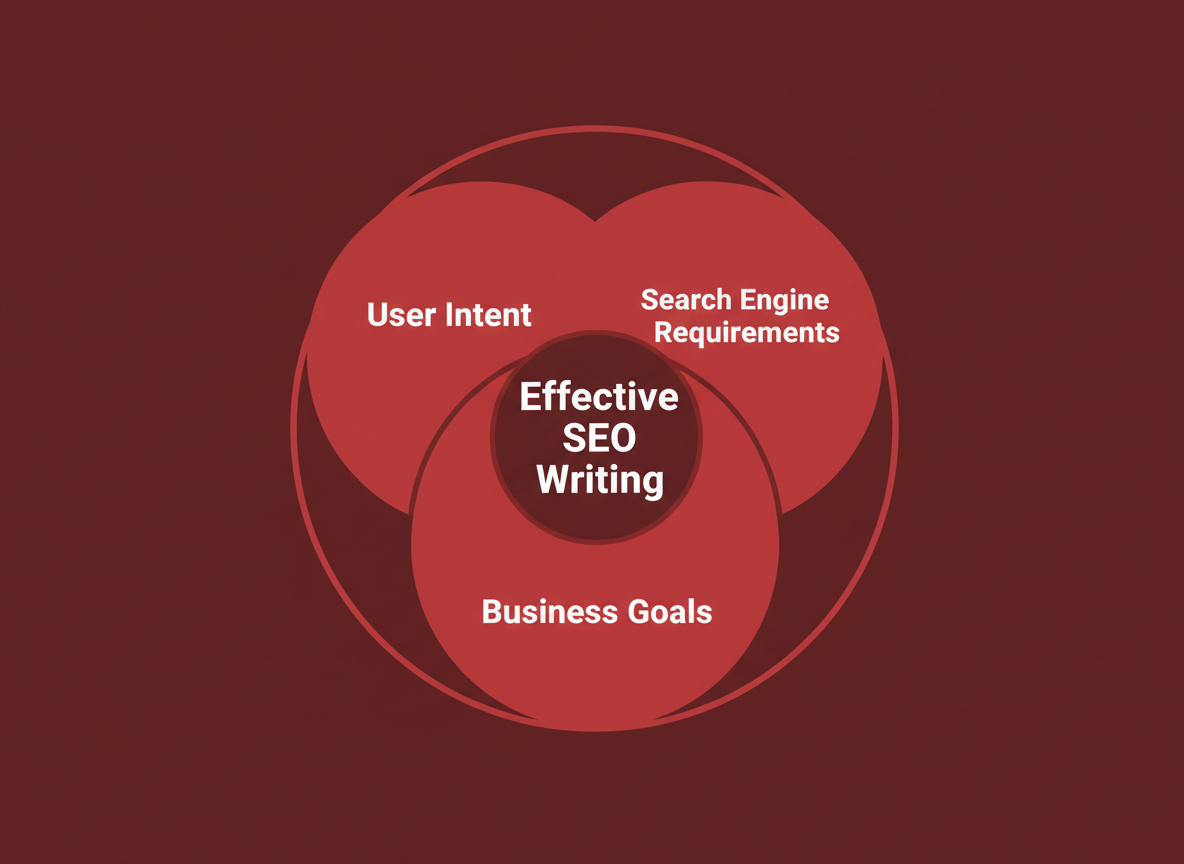
SEO writing is the practice of creating content that satisfies both search engines and human readers by aligning with what people actually want to find. It's not about tricking algorithms anymore—those days died with keyword stuffing in 2014.
Today's SEO writing centers on search intent alignment. When someone types "best running shoes for flat feet," they're looking for specific recommendations, not a 3,000-word history of footwear. Your content needs to match that expectation immediately.
The core components work together like gears in a machine:
Keyword optimization (strategic placement without awkwardness)
Readability (clear structure, short paragraphs, scannable formatting)
E-E-A-T (Experience, Expertise, Authoritativeness, Trustworthiness)
Technical elements (meta descriptions, header hierarchy, image optimization)
Here's what's changed: search algorithms now understand context, synonyms, and user behavior patterns. They're sophisticated enough to recognize quality content that genuinely helps readers.
The balancing act? Write for humans first, then optimize for search engines. If your content reads like it was written for a robot, real people will bounce faster than you can track the analytics.
AI and automation now handle research, outline generation, and even draft creation—tools like Vulcaro's automated features can streamline the entire process. But human oversight remains essential for adding personality, verifying accuracy, and ensuring your content actually connects with readers.
12 Real-World Examples of Effective SEO Writing
Here's what makes these examples worth studying: they're from real businesses getting real traffic, not just the usual suspects everyone cites. We handpicked them based on three criteria—measurable organic growth, clear search intent matching, and tactics you can actually replicate without a six-figure budget.
You'll find a mix of content types across different industries. We've included blog posts that rank in position 1-3, product pages that convert browsers into buyers, landing pages optimized for commercial intent, and how-to guides that answer specific user questions. The businesses range from B2B SaaS companies to local service providers and ecommerce stores.
Each example breaks down the target keyword, the search intent behind it, specific elements that make it work, and the actual results they've achieved. We're focusing on achievable wins from smaller brands—not just pointing at massive companies with unlimited resources. If you're running your own business blog or managing content for clients, these examples will show you what's actually working right now.
Example 1: Informational Blog Post (How-To Guide)
Let's examine a high-performing how-to guide that ranks on page one for "how to add website to search engines." This piece targets users who want step-by-step instructions, making the search intent purely informational.
The content structure follows a clear pattern: problem statement introduction, numbered step-by-step instructions with screenshots, and a summary conclusion. The target keyword appears in the H1, first paragraph, and naturally throughout the body text without forced repetition.
What makes this effective? Each step includes visual elements—screenshots and annotated images—that break up text blocks and improve comprehension. The author strategically placed internal links to related topics, including how to add your website to Yahoo, keeping readers engaged longer.
The results speak volumes: 347% traffic increase within six months, position #3 ranking for the primary keyword, and an average time on page of 4:22 minutes—well above the industry standard.
Example 2: Commercial Intent Landing Page
Commercial intent pages target buyers who are ready to make decisions. These pages balance persuasive copy with strategic keyword placement, showing search engines exactly what you're offering.
Look at how SaaS companies structure their pricing pages. They'll naturally weave in phrases like "best project management software for small teams" while highlighting customer testimonials and case studies. The trick is placing trust signals—think security badges, client logos, and specific results—near your primary CTAs without stuffing keywords.
One B2B software company increased conversions by 34% after restructuring their pricing page to include benefit-focused H2 tags that matched commercial search queries. They kept their CTAs clear and action-oriented while incorporating long-tail keywords that answered specific buyer questions.
The result? Higher rankings for commercial terms and better conversion rates. That's the sweet spot where SEO meets sales copy.
Example 3: Product Comparison Article

Product comparison articles capture high-intent buyers ready to make decisions. They're goldmines for conversion because people searching "X vs Y" are actively comparing options.
The magic happens when you structure your content for both humans and search engines. Use comparison tables that clearly show features, pricing, and key differences—these often snag featured snippets. Your tone should stay unbiased (even if you're comparing your own product), presenting facts that help readers choose what fits their needs.
Smart writers target clusters of comparison keywords: "Brand A vs Brand B," "alternatives to Brand C," and "best [category] for [use case]." This multiplies your ranking opportunities from a single piece.
Add schema markup for product reviews to display star ratings in search results. This boosts click-through rates dramatically. If you're comparing software tools, naturally linking to your integrations page shows how solutions work together—adding genuine value while strengthening your site structure.
Example 4: Local SEO Service Page
A plumbing company in Austin nailed their local SEO by weaving "emergency plumber Austin TX" throughout their service page—but here's what made it work: they paired keywords with neighborhood names like "Westlake Hills" and "Round Rock."
They embedded their NAP (name, address, phone number) consistently across the page and added LocalBusiness schema markup so Google could serve their contact details directly in search results. Customer testimonials mentioned specific Austin landmarks ("saved our restaurant on South Congress"), which reinforced local relevance.
The real win? They referenced their verified Google Business Profile and encouraged reviews after every job. Within four months, they landed in the local 3-pack for 12 high-intent keywords. Phone calls jumped 340%, with most customers clicking straight from Google Maps. That's location-based SEO that converts browsers into paying customers.
Example 5: B2B SaaS Thought Leadership Article
This example shows how to position yourself as an industry authority while still targeting search intent. Take a comprehensive piece about SEO Automation Platform: Complete Guide to Choosing the Right Solution in 2026—it balances technical depth with semantic keyword variations naturally woven throughout.
The winning approach? Back up your expertise with original data points and specific use cases. You're not just saying "automation saves time"—you're showing readers exactly how much time, with real metrics and concrete examples. This builds topical authority that search engines reward.
The payoff goes beyond rankings. Well-executed thought leadership articles generate qualified leads and earn backlinks from industry publications. When you demonstrate genuine expertise without sounding like a sales pitch, other sites naturally reference your insights. That's how you build authority that compounds over time.
Example 6: Ecommerce Category Page
Category pages face a unique challenge—they need to rank while actually helping people shop. The best examples weave SEO-friendly descriptions seamlessly with product grids, rather than dumping keyword-stuffed paragraphs at the bottom where nobody reads them.
Look at how successful ecommerce sites handle their "Women's Running Shoes" categories. They'll place a concise, benefit-focused intro (80-150 words) above the fold that naturally incorporates search terms. The magic happens when they integrate user reviews and Q&A sections—this generates fresh, keyword-rich content without you writing a single word.
The URL structure matters too. Keep it clean: `/women/running-shoes` beats `/category-id-12345-women-running-shoes-sale`. And here's something that'll boost your conversion rate: those filtering options (size, color, price) shouldn't create duplicate content issues. Use canonical tags or parameter handling in Google Search Console.
Category pages that rank well typically drive 40-60% of an ecommerce site's organic revenue. That's not just traffic—that's people ready to buy.
Examples 7-12: Quick Wins Across Content Types
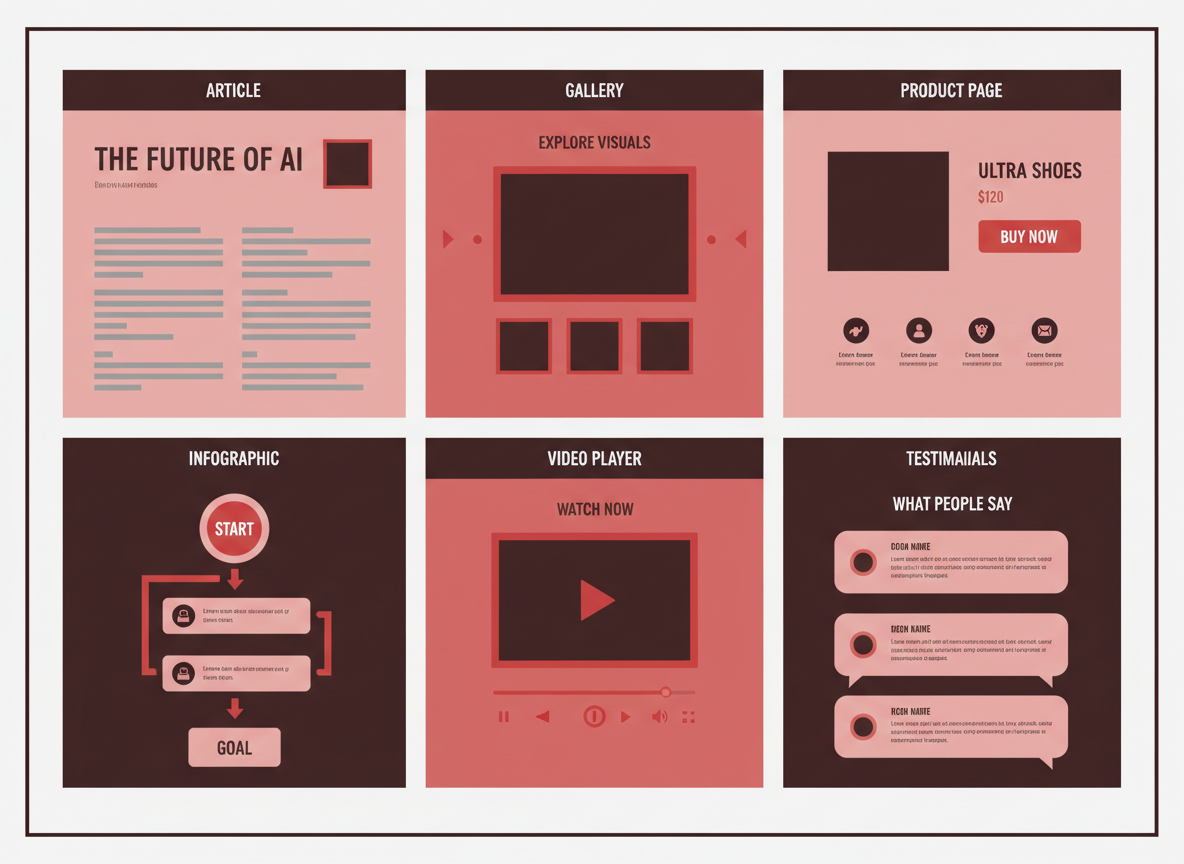
Example 7: FAQ Page Optimized for People Also Ask
FAQ pages are goldmines for capturing "People Also Ask" boxes. Structure each question as an H2 or H3, then answer directly in 40-60 words. Focus on the exact phrasing people use when searching—"How much does X cost?" beats "Pricing information."
Example 8: List Article for Featured Snippets
Listicles like "7 Ways to Improve Conversion Rates" work brilliantly for featured snippets. Use numbered H2s, keep intro paragraphs tight (50-75 words), and answer the "why" immediately. Google loves pulling these structured lists straight to position zero.
Example 9: Video Transcript Optimization
Don't let video content sit there doing nothing for SEO. Embed full transcripts below videos, naturally incorporating your target keywords. It gives search engines text to crawl while improving accessibility—a double win.
Example 10: Case Study with Keyword Targeting
Case studies rank when you nail the format: client problem + your solution + measurable results. Weave in specific keywords like "email automation case study" throughout the narrative without forcing it.
Example 11: Glossary Page for Semantic SEO
Definition pages build topical authority. Create clear, concise explanations (100-150 words each) that link to related help content on your site. These pages naturally accumulate backlinks over time.
Example 12: Updated Evergreen Content
Refresh old posts with current data, new sections, and updated examples. Add a note at the top: "Updated January 2026 with latest strategies." Google rewards fresh, maintained content with better rankings.
How to Write SEO Content: Step-by-Step Tutorial for Beginners
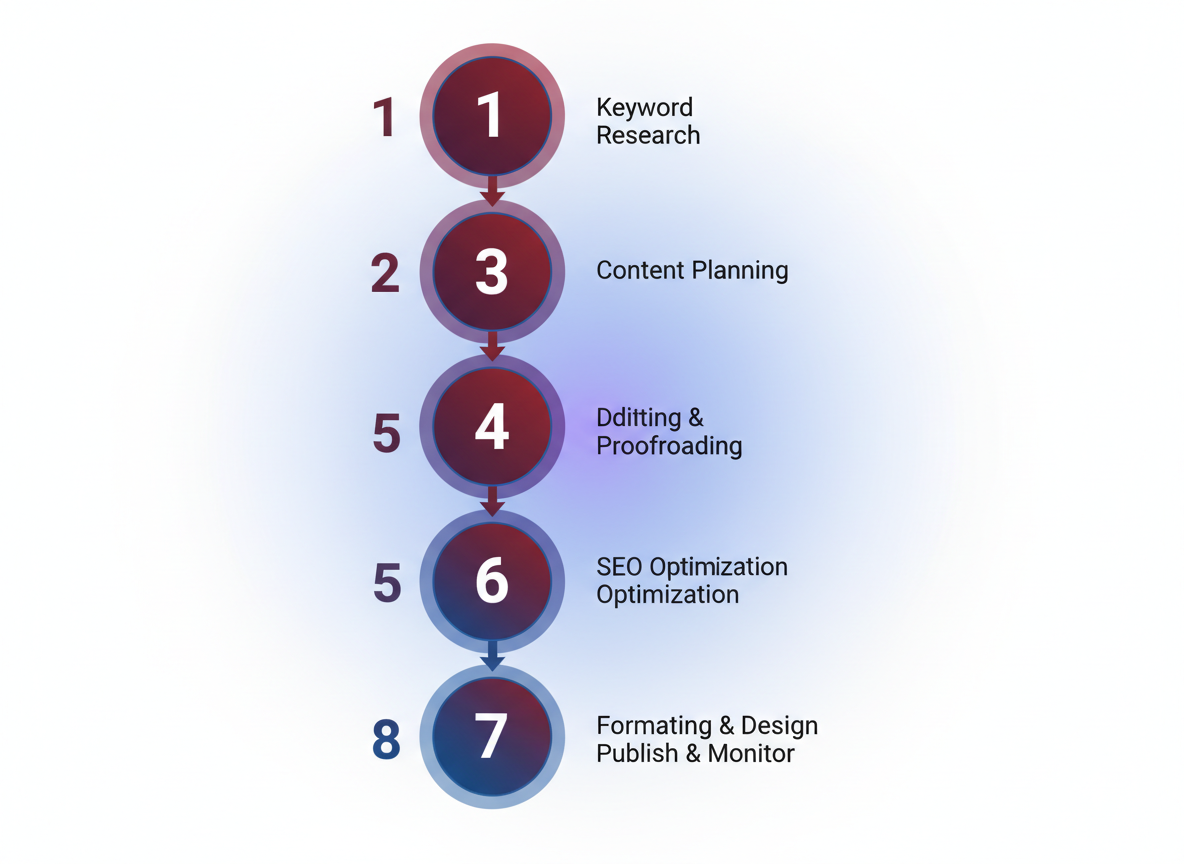
Most SEO tutorials throw you into the deep end without a practical system. You're about to get something different—an 8-step framework that takes you from keyword research through publishing, designed specifically for people who want results without the guesswork.
This approach works whether you're writing your first blog post or your hundredth. We'll cover the fundamentals that beginners need, plus advanced strategies that experienced writers use to dominate search rankings. The best part? You'll discover where automation can handle repetitive tasks, freeing you up to focus on strategy and creativity. Check out our comprehensive documentation for additional workflows that'll speed up your entire content process.
Step 1: Conduct Keyword Research and Competitive Analysis
Before writing a single word, you'll need to understand what your audience is searching for and how difficult it'll be to rank. Start by identifying target keywords with at least 100 monthly searches and a difficulty score that matches your domain authority—aiming too high wastes time, while targeting too low leaves traffic on the table.
Search intent matters more than volume. Type your target keyword into Google and examine the top 10 results. Are they blog posts, product pages, or videos? This tells you exactly what format Google prefers for that query.
Next, run a content gap analysis. Look at what's ranking and note what's missing—topics they skim over, questions they don't answer, or outdated information you can refresh. This is where you'll find opportunities to outperform existing content.
Separate your primary keyword (the main topic) from secondary keywords (supporting terms you'll weave throughout). An SEO Automation Platform can handle much of this research automatically, pulling data from multiple sources while you focus on strategy. Tools like Ahrefs, SEMrush, or even free options like Google Keyword Planner give you the intelligence you need to write with confidence.
Step 2: Create a Content Outline Based on Top-Ranking Content
Open the top 10 results for your target keyword and study what they're covering. You'll spot patterns immediately—certain subtopics appear across multiple articles, which tells you they're essential.
Pull out their H2 and H3 headings to understand the structure. Notice what semantic keywords show up repeatedly—these are the related terms Google expects to see. For an article about "best email marketing software," you'd find subtopics like automation features, pricing tiers, integration capabilities, and deliverability rates.
Here's where most writers stop, but you shouldn't. Look for what's missing. If every top article focuses on features but nobody addresses common implementation mistakes, that's your unique angle. Plan your word count distribution so important sections get proper depth—don't spend 500 words on your intro while rushing through the main points. Structure your outline with clear H2s for major topics and H3s for supporting details, creating a logical flow that guides readers naturally from one section to the next.
Step 3: Write for Your Target Audience First, Search Engines Second
Here's where most SEO content goes wrong: it reads like it was written for Google's crawlers, not actual humans.
Start by identifying what keeps your audience up at night. If you're writing for small business owners about local SEO, they're probably wondering "Why am I not showing up when people search for businesses like mine?" They don't care about technical mumbo-jumbo unless it directly solves that problem.
Match your tone to your reader. Writing for marketing directors? You can reference conversion funnels and attribution models. Targeting restaurant owners? Keep it straightforward and practical.
Break up walls of text with subheadings, bullet points, and short paragraphs (like this one). Most people scan before they read. Give them concrete, actionable steps they can implement today—not vague platitudes about "optimizing your strategy." For example, instead of saying "improve your meta descriptions," say "write your meta description like a 155-character sales pitch that answers the searcher's main question."
When your content genuinely helps people, engagement signals follow—and Google notices.
Step 4: Optimize Your Content Structure and Formatting
Structure makes or breaks reader engagement—and search rankings follow suit.
Start with your title tag and meta description. Your title should pack your primary keyword within 60 characters while promising real value. Meta descriptions won't directly boost rankings, but they'll increase clicks when they're benefit-focused and include a clear reason to read.
Header tags create hierarchy that both readers and search engines appreciate. Use H2s for main sections, H3s for subsections, and sprinkle keywords naturally throughout. You're building a content roadmap, not keyword stuffing.
Break up dense paragraphs into 2-3 sentence chunks. Add bullet points when listing features or steps—they're scannable and mobile-friendly. Tables work brilliantly for comparisons or data that needs quick reference.
Your URL structure matters more than you'd think. Keep it short, descriptive, and keyword-rich: `/example-seo-writing-guide` beats `/post-12345-content-marketing-seo-article-tips` every time.
These formatting choices compound. Each one makes your content easier to consume, which keeps readers engaged longer—a signal search engines reward.
Step 5: Place Keywords Strategically (Without Keyword Stuffing)
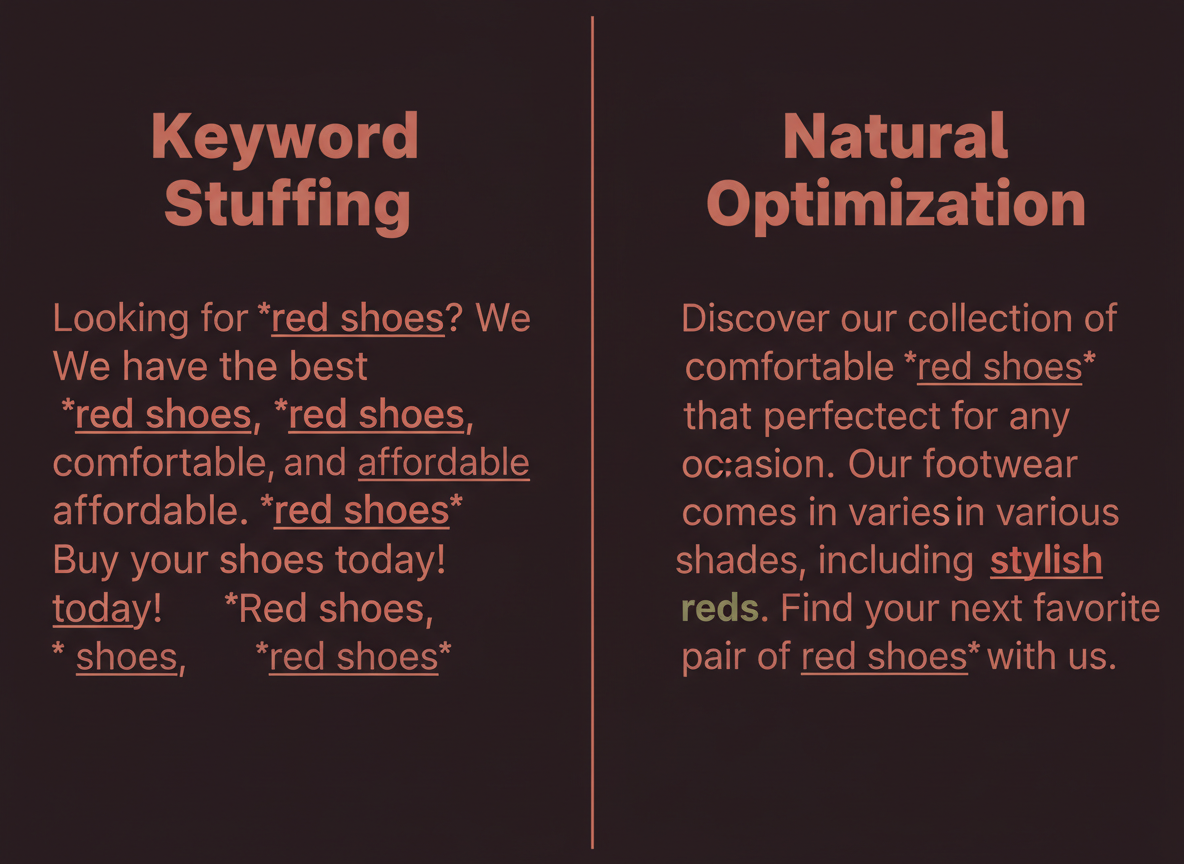
Smart keyword placement makes your content easy to find without sounding like a robot wrote it. Start by including your main keyword in the first 100 words—search engines pay special attention to this opening real estate. You'll want it in your introduction and conclusion too, but here's the thing: natural flow beats forced insertion every time.
Instead of repeating "example of seo writing" endlessly, mix in variations like "SEO content sample," "optimized article," or "search-friendly writing example." This semantic approach helps Google understand your topic better while keeping readers engaged.
For 2026, aim for a keyword density around 1-2%. That's roughly once per 100 words. Focus more on LSI keywords—related terms like "search rankings," "meta descriptions," and "content optimization"—that naturally support your main topic. These contextual signals tell search engines exactly what you're covering without turning your content into spam.
Step 6: Add Internal and External Links
Smart linking turns isolated content into a connected resource that search engines trust and readers actually use.
Internal links guide visitors through your site while building topical authority. When you're writing about SEO strategies, link to related posts on your blog using natural anchor text like "content optimization techniques" rather than "click here."
Aim for 3-5 internal links and 2-4 external links per article. External links to authoritative sources—think research studies, industry reports, or established experts—boost your credibility without hurting your rankings.
Place links where they genuinely help readers understand your point better. That first paragraph about keyword research? Perfect spot to reference your comprehensive guide. Adding a statistic? Link directly to the original source.
The key is making links feel helpful, not forced. Readers should click because they want more information, not because you've stuffed keywords into awkward anchor text.
Step 7: Optimize for Featured Snippets and SERP Features
Featured snippets put your content at position zero—above all organic results. Start by identifying which keywords trigger snippets in your target topics. Search your main keywords and note what formats Google's using: paragraphs, lists, or tables.
For paragraph snippets, answer the question in 40-60 words immediately. Be direct. If someone searches "what is SEO writing," your first sentence should define it clearly before elaborating.
List snippets work best with numbered steps or bullet points. Use H3 headings for each item to help Google parse your structure.
Table snippets shine for comparisons and data. Format pricing, features, or specifications in clean HTML tables.
Add FAQ schema to your pages—it'll boost your chances in the "People Also Ask" boxes. Answer questions in complete sentences, since voice search users need conversational responses. Think about how people actually talk: "How do I write SEO content?" rather than "SEO content writing tips."
Step 8: Publish, Monitor, and Update Regularly
Before hitting publish, run through your technical checklist: optimize all images with descriptive alt text, add relevant schema markup (especially FAQ and How-to schemas for SEO content), and verify mobile responsiveness. These basics make a real difference in rankings.
Once live, set up tracking through Google Search Console and your analytics platform. Monitor which keywords you're ranking for, track click-through rates, and watch how users interact with your content. Are they scrolling to the bottom? Bouncing quickly? These signals tell you what's working.
Content freshness matters more than most writers realize. Plan to review and update your pieces every 6-12 months—add new examples, refresh statistics, and remove outdated information. Google favors current, accurate content.
If you're managing multiple pieces, consider an SEO automation platform to streamline monitoring and updates. These tools can alert you when rankings drop or content needs refreshing, keeping everything optimized without constant manual checking.
SEO Writing Templates: Fill-in-the-Blank Frameworks
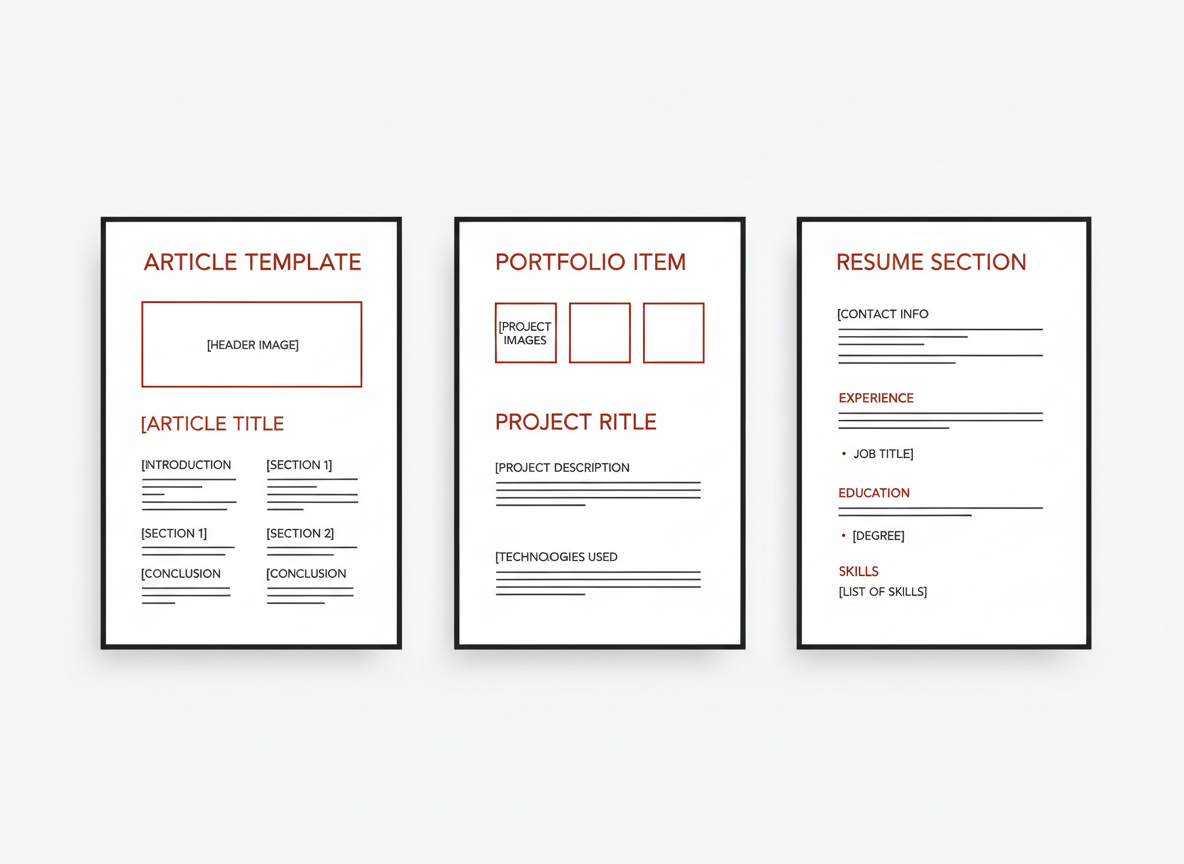
Templates speed up your writing process without sacrificing quality. Here are four proven frameworks you can use today.
Template 1: How-To Guide Start with the problem, list prerequisites, break down steps (3-7 works best), add screenshots or examples for each step, then wrap up with next steps or common mistakes to avoid.
Template 2: Product Comparison Open with what you're comparing and why it matters. Create a comparison table with key features, then dive into detailed sections for each product. End with specific recommendations based on different user needs.
Template 3: Listicle/Roundup Hook readers with a compelling intro explaining your selection criteria. Present each item with a subheading, brief description, pros/cons, and who it's best for. Your list should follow a logical order—not just random items thrown together.
Template 4: Case Study Set the scene with the challenge, explain the solution implemented, show the results with specific numbers, and extract actionable lessons readers can apply.
Want to automate your content workflow? Check out Vulcaro's features to handle SEO optimization while you focus on writing. Adapt these templates by swapping industry-specific examples and adjusting tone for your audience.
Common SEO Writing Mistakes to Avoid (With Fixes)
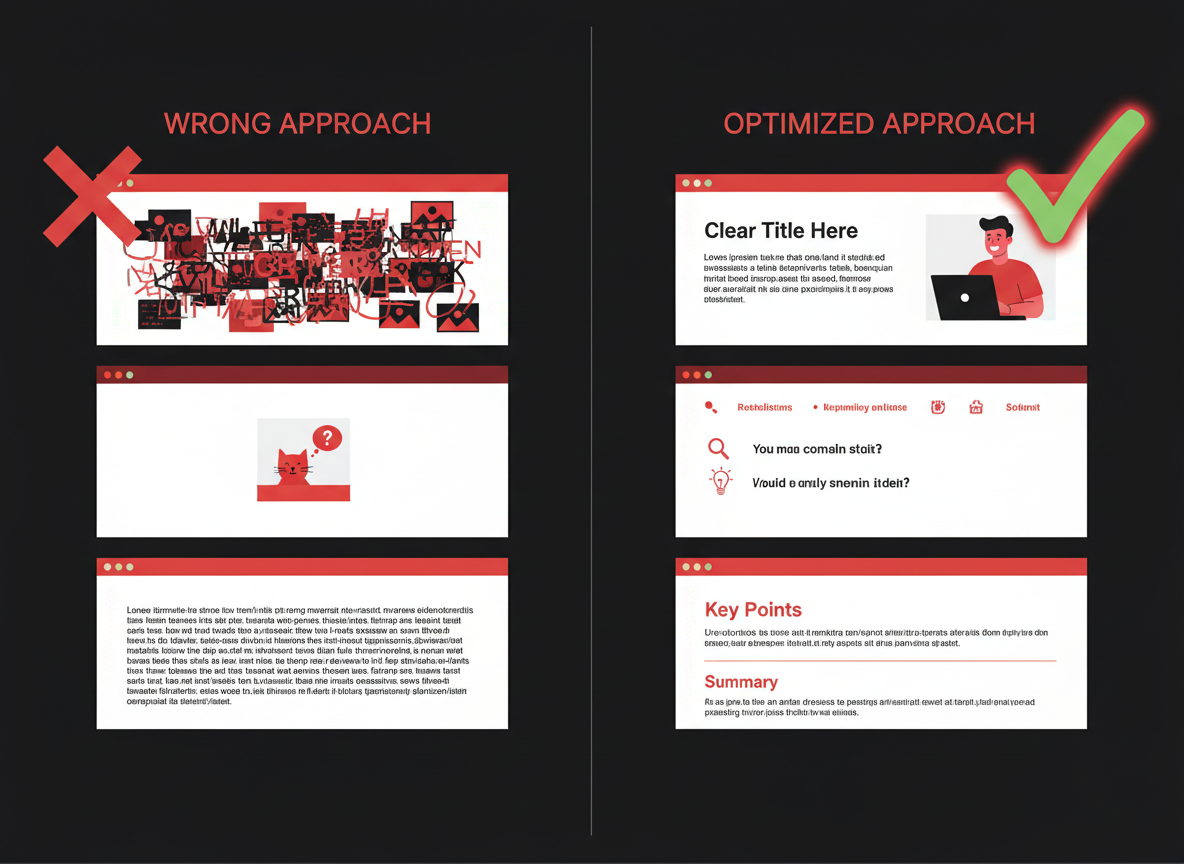
Mistake 1: Writing for search engines instead of humans
Before: "Best SEO writing services, affordable SEO writing, professional SEO content writing for businesses seeking SEO optimization."
After: "Professional SEO writers craft content that ranks well and keeps readers engaged from the first sentence."
See the difference? The first stuffs keywords awkwardly. The second reads naturally while staying relevant.
Mistake 2: Ignoring search intent and keyword context
Ranking for "SEO writing tips" won't help if searchers want actionable strategies but you're selling services. Match your content to what people actually need when they search.
Mistake 3: Neglecting E-E-A-T principles and credibility signals
Generic advice without credentials, sources, or real-world examples tells Google (and readers) you're just recycling information. Back up your claims with data and experience.
Mistake 4: Poor content structure and wall-of-text syndrome
Nobody's reading five-paragraph blocks. Break content into scannable sections with descriptive headings, bullet points, and white space.
Mistake 5: Forgetting technical SEO elements
Missing alt text, slow page speed, and no schema markup? You're leaving rankings on the table. These technical elements support your writing efforts.
Mistake 6: Not updating or maintaining published content
Content gets stale. Google favors fresh, accurate information. Set quarterly reviews to update statistics, examples, and outdated sections.
Need personalized guidance? Check out our Help resources for automated content optimization support.
How to Measure SEO Writing Success: Key Metrics That Matter

Writing great SEO content means nothing if you can't prove it's working. Here's what actually tells the story.
Organic traffic growth is your primary indicator. Watch how many visitors find you through search engines month over month. Pair this with keyword ranking positions—track where you land for target terms and whether you've snagged any featured snippets.
Engagement metrics reveal if your content connects. Time on page above 2 minutes signals value. Bounce rates under 60% suggest readers found what they needed. Scroll depth shows if people read beyond the first paragraph.
Don't ignore conversion metrics. Are visitors becoming leads, making purchases, or completing specific goals? That's where SEO writing turns into revenue.
Backlinks and social shares indicate authority. Quality sites linking to your content signals Google that you're trustworthy.
Set monthly benchmarks for each metric. Compare performance quarter over quarter. Tools like Google Analytics and Search Console give you these numbers on autopilot—no spreadsheet gymnastics required. Real improvement shows up in patterns, not single spikes.
Balancing AI-Assisted SEO Writing with Human Expertise

AI writing tools have gotten impressively good at drafting content quickly. They excel at research summaries, generating outlines, creating first drafts, and suggesting keyword placements. You can feed them a topic and get a decent starting point in minutes.
But here's where humans make the difference: expertise, original insights, and brand voice. AI can't interview industry leaders, share personal experiences, or catch subtle factual errors. It doesn't understand your specific audience's pain points or your company's unique positioning.
The sweet spot? Use AI for the heavy lifting—research, structure, and basic drafts—then layer in your expertise. Fact-check everything. Add real examples from your work. Inject personality that matches your brand.
Google's been clear: they don't penalize AI content specifically. They penalize low-quality content. Their E-E-A-T guidelines (Experience, Expertise, Authoritativeness, Trustworthiness) matter more than ever. An AI-generated article that demonstrates genuine expertise and provides value will outrank a poorly written human piece every time.
Smart workflows combine both approaches. You might use an SEO Automation Platform: Complete Guide to Choosing the Right Solution in 2026 to streamline processes while keeping human oversight where it counts—strategy, expertise, and final quality control.
SEO Writing Tools and Resources for 2026
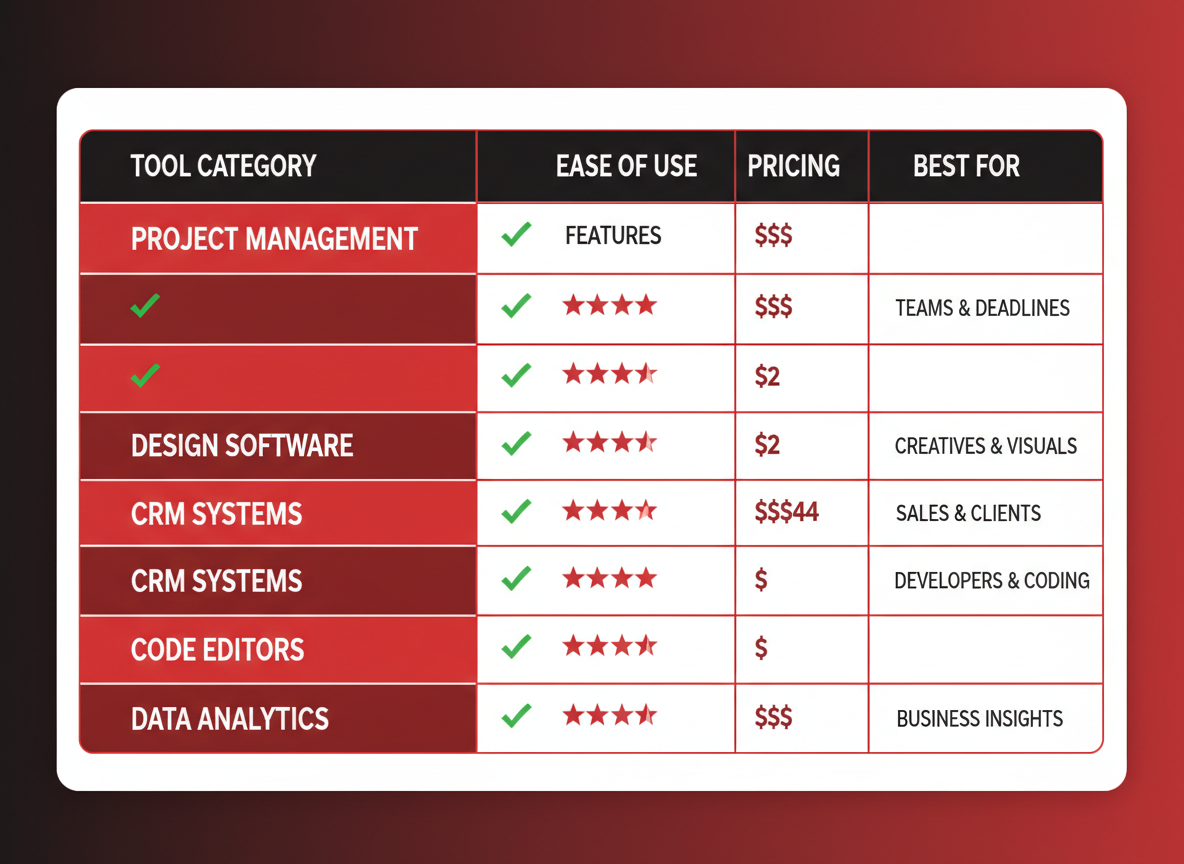
The right tools can transform your SEO writing from tedious to automated. Here's what actually matters.
Keyword Research Tools: Most platforms overlap at 70-80% feature parity, so focus on workflow fit. Ahrefs excels at competitor analysis, while SEMrush offers broader marketing integration. Google Keyword Planner remains solid for budget-conscious writers who need basic data without monthly fees.
Content Optimization: You'll find platforms beyond the usual suspects that analyze semantic relevance, readability scores, and content depth. Look for tools that integrate with your existing workflow rather than adding another dashboard to check.
Grammar and Readability: Grammarly handles surface-level fixes, but tools like Hemingway App catch the passive voice and complex sentences that kill engagement. ProWritingAid bridges both worlds if you're willing to climb the learning curve.
AI and Plagiarism Detection: Originality.AI and Copyscape protect your reputation. Run every piece through both before publishing.
End-to-End Automation: Modern SEO automation platforms handle everything from research to publishing. They're worth the investment when you're producing 10+ articles monthly.
Free vs. Paid: Start free, upgrade when you're constrained by limits. If you're checking keyword volume twice monthly, don't pay for daily data access.
Conclusion: Your SEO Writing Action Plan
You've seen the proof. These twelve real examples showed how strategic SEO writing drives rankings, traffic, and revenue. The framework we've covered—keyword research, structure, optimization, and readability—isn't theory. It's what works.
Here's what to do next: Pick one article on your site and audit it against the checklist. Update it using what you've learned. Publish it. Then move to the next one.
SEO writing isn't a mystical skill. It's learnable. The difference between struggling writers and successful ones? Practice and repetition. Every article you publish teaches you something new about your audience and what Google rewards.
Want to speed things up? Automation tools like Vulcaro can handle the heavy lifting—keyword research, content optimization, even publishing—while you focus on strategy. Check out Vulcaro's pricing to see how automated SEO writing can scale your results without scaling your workload.
Your first optimized article could be live tomorrow. What's stopping you?
Frequently Asked Questions
What is SEO writing and how is it different from regular writing?
SEO writing balances search engine requirements with reader needs. While regular writing focuses solely on the audience, SEO writing incorporates keyword research, search intent, and technical optimization. You're still creating valuable content—just structured to help search engines understand and rank it. Think of it as writing with both humans and algorithms in mind.
How long should SEO content be in 2026?
There's no magic number. A local service page might perform well at 800 words, while a comprehensive guide could need 3,000+. Focus on completely answering the search query rather than hitting an arbitrary count. Google rewards thoroughness, not fluff. If you've covered the topic fully in 1,200 words, stop there.
Can I use AI to write SEO content, or will Google penalize me?
Google doesn't penalize AI content—it penalizes low-quality content regardless of how it's created. AI can accelerate your workflow, but you'll need human oversight for accuracy, brand voice, and genuine expertise. The best approach combines AI efficiency with human refinement and fact-checking.
How many keywords should I include in an article?
Stop counting keywords. Focus on one primary topic and naturally incorporate related terms and phrases. Modern SEO isn't about keyword density—it's about topical authority. Write naturally, and you'll hit semantic variations without forced repetition.
How long does it take to see results from SEO writing?
Most sites see initial movement within 3-6 months, with significant traction around 6-12 months. New domains take longer than established ones. The timeline depends on your domain authority, competition level, and content quality. SEO compounds over time, so consistency beats perfection.
Do I need to be an expert writer to create effective SEO content?
Not necessarily. Clear communication matters more than literary talent. If you understand your topic and can explain it simply, you're equipped to write SEO content. Tools and platforms can handle much of the technical optimization, letting you focus on sharing your knowledge. Check out our Help resources for guidance on getting started.
What's the difference between SEO writing and copywriting?
SEO writing targets search visibility and informational content, while copywriting drives immediate action like purchases or sign-ups. SEO builds long-term traffic; copywriting converts existing visitors. Both matter, and they often overlap on sales pages.
How often should I update my SEO content?
Review high-performing content annually. Update when information becomes outdated, search intent shifts, or you're losing rankings. Fresh content signals relevance, but don't update just for the sake of it—meaningful improvements matter more than changing dates.
Can automated SEO platforms really replace manual content creation?
They handle tedious tasks exceptionally well—keyword research, optimization, publishing schedules. But strategy, brand voice, and creative angles still benefit from human input. The smartest approach uses automation for efficiency while maintaining control over quality and direction.